Creators testing a series idea
Make a pilot episode of a micro drama before planning a whole run, and find out whether the hook holds on a small screen.
Pitch the hook, choose 9:16, and filmaris turns your premise into an upright episode with the same faces in every shot, spoken lines and music.
Try your episode idea at no cost: the script and first pictures of your roles, settings and props, with a confirmed e-mail.
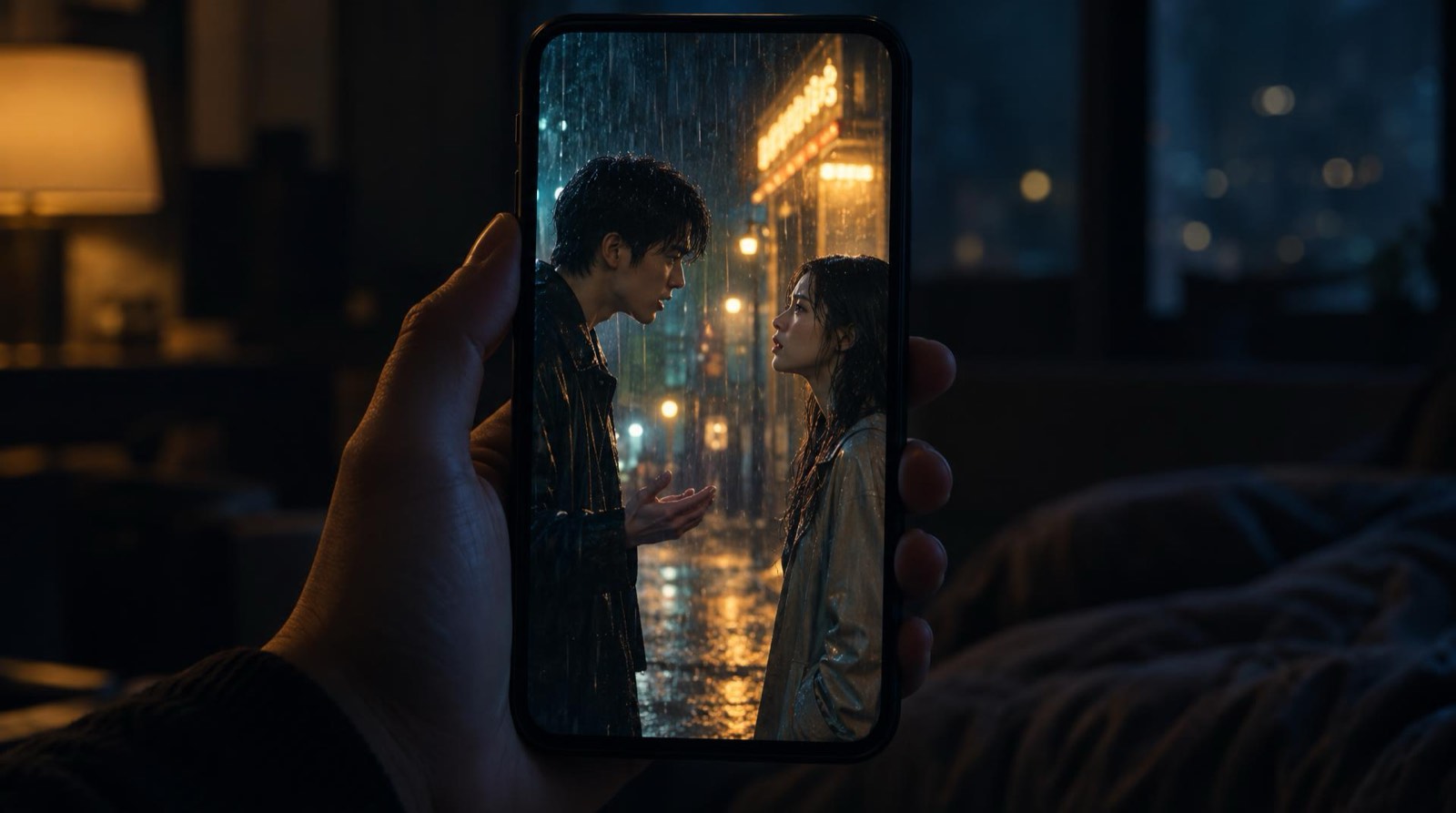
Short dramas, also called micro dramas or vertical dramas, are serial stories told in episodes of a minute or two, framed upright for the phone and built on hooks, reversals and cliffhangers. The format grew up on Chinese short-video apps and is now watched on phones everywhere. Used as an AI drama generator, filmaris takes it from there: describe the premise, choose the vertical frame and a length of one, three or ten minutes, and the Script Writer writes the episode one scene after another. Dialogue can be written in English, Chinese, Spanish, French, German or Hindi, and you sign off the script before anything is drawn.
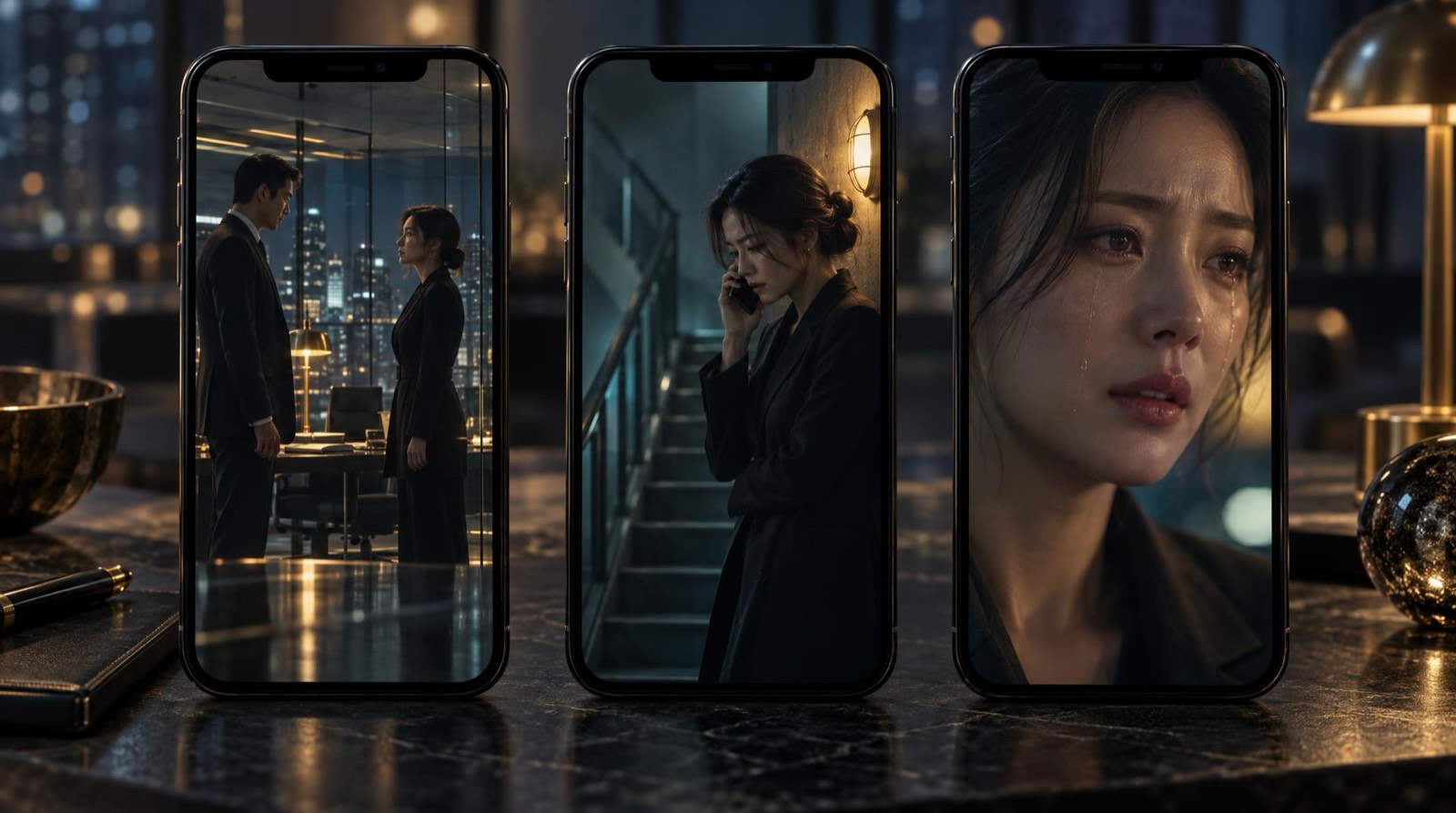
An AI vertical drama lives on a phone screen, so its pictures have to be composed upright from the start rather than cropped out of widescreen. Set the film to 9:16 and every storyboard frame is drawn in portrait, every video shot takes its shape from that frame, and the exported file is tall as well: at 1080p it measures 1080 pixels across and 1920 high. Close-ups carry the genre, because the story sits in the faces of its people, the betrayed bride, the cold heir, the rival who knows the secret, and a portrait frame keeps those faces large.
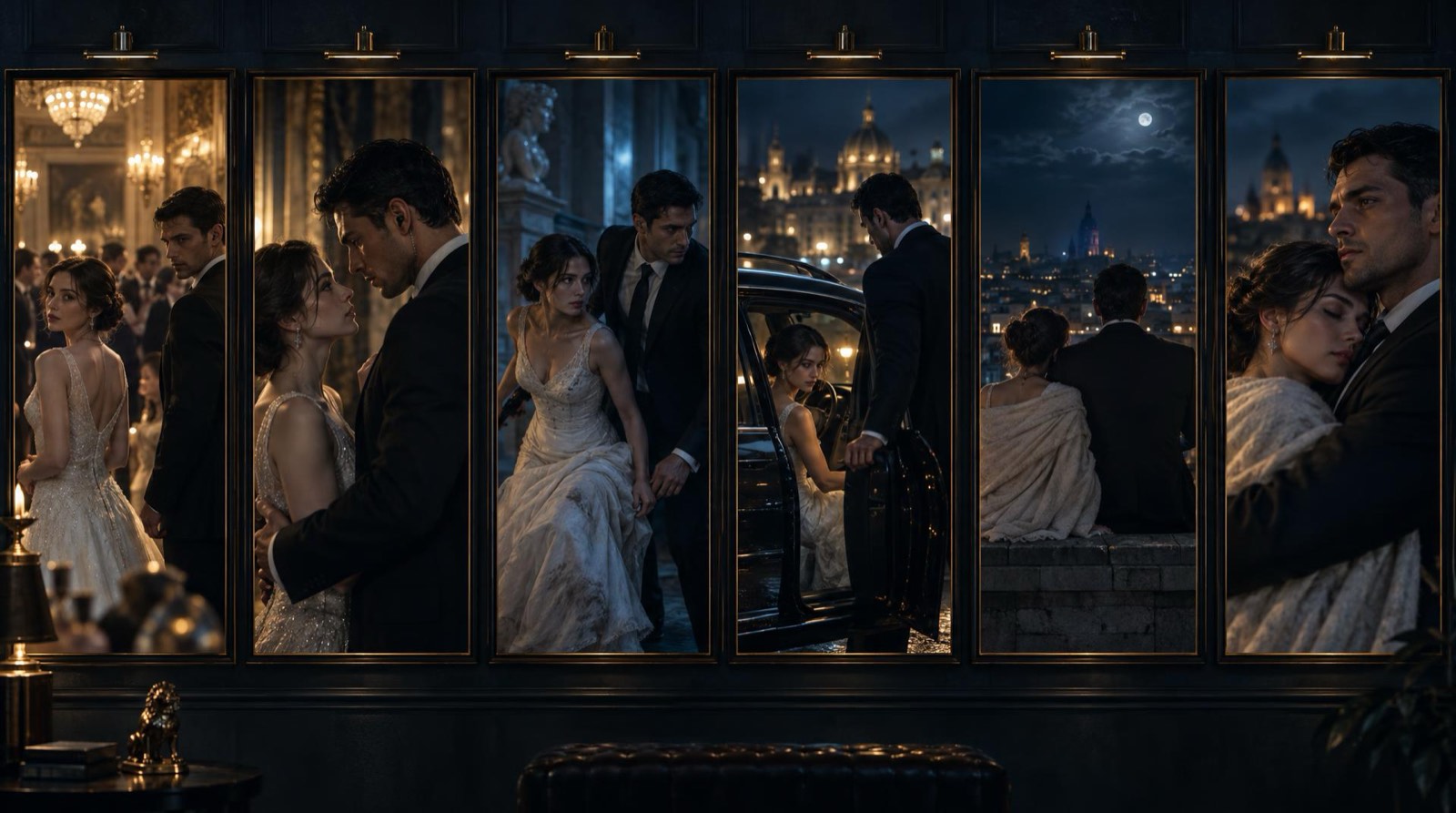
Viewers return for the characters, so they have to look and sound the same in every scene. filmaris draws each role first, a face close-up and the full figure seen frontally, half-turned and from the rear, and builds every frame of the episode from those pictures. Each character has a voice description of their own, ElevenLabs speaks the lines in that voice with the emotion the script marks, and a score from ElevenLabs Music and sound effects run underneath. The voice description sits on the character's card, where you can rewrite it before the lines are spoken.

Write the premise in a sentence or two: whose heart breaks, who lies, which twist ends it. Pick 9:16, the runtime and the language of the dialogue.
Read the scenes and lines, meet the characters on their reference sheets and flip through the portrait storyboard, or let filmaris run on without stopping.
Shots are rendered upright, voiced and scored, then joined on the timeline. Tighten the cut and save the episode for your channel.
Make a pilot episode of a micro drama before planning a whole run, and find out whether the hook holds on a small screen.
Draft episodes of an AI short drama series fast, keep each lead's face fixed in every shot of an episode, and judge each story on screen instead of on paper.
Turn a chapter of a romance or revenge story into an upright episode that keeps its people and the words they say.
Run a product story as a short drama rather than an advert, one vertical episode after another, each ending on a hook that pulls viewers into the next.
The start is free, with a confirmed e-mail. filmaris writes the script of your episode and draws the opening pictures of your roles, settings and props, so you see your cast before you pay. The finished episode, with real AI video for each shot and the characters' voices, belongs to the paid plans.
Start my first episode →A short drama, or micro drama, is a series told in episodes of one to a few minutes, framed vertically for phones and driven by hooks and cliffhangers. In an AI short drama the script, the pictures, the voices and the music are generated, which is what filmaris does.
Yes. Choose 9:16 when you set up the film; the storyboard frames, the video shots and the exported file all come out in portrait. Widescreen 16:9 and classic 4:3 are there as well.
Choose one, three or ten minutes at the start, or import a script or book and type the length in minutes yourself. Most micro drama episodes run one to three minutes.
filmaris makes one episode at a time: each episode is a project of its own, with its own script, cast sheets, storyboard and cut. You plan the arc of the season and bring it in episode by episode.
The Script Writer writes dialogue in English, Chinese, Spanish, French, German and Hindi, and generated ElevenLabs voices perform the lines with the emotion the script gives them.
On a paid plan, yes: commercial use comes with the paid plans, so episodes for a paid app or a monetized channel belong there. The Free plan leaves commercial use out, so use it to try a format first.