Writers with an unfilmed story
Hear your characters speak their lines and see your scenes follow each other on screen, long before there is any budget or crew.
Write a prompt and get back a movie, not a moment: every scene in story order, from the opening image to the last line anyone speaks.
Your debut movie costs nothing (one per verified inbox): one minute of storyboard with voices and camera motion, landing on your computer.
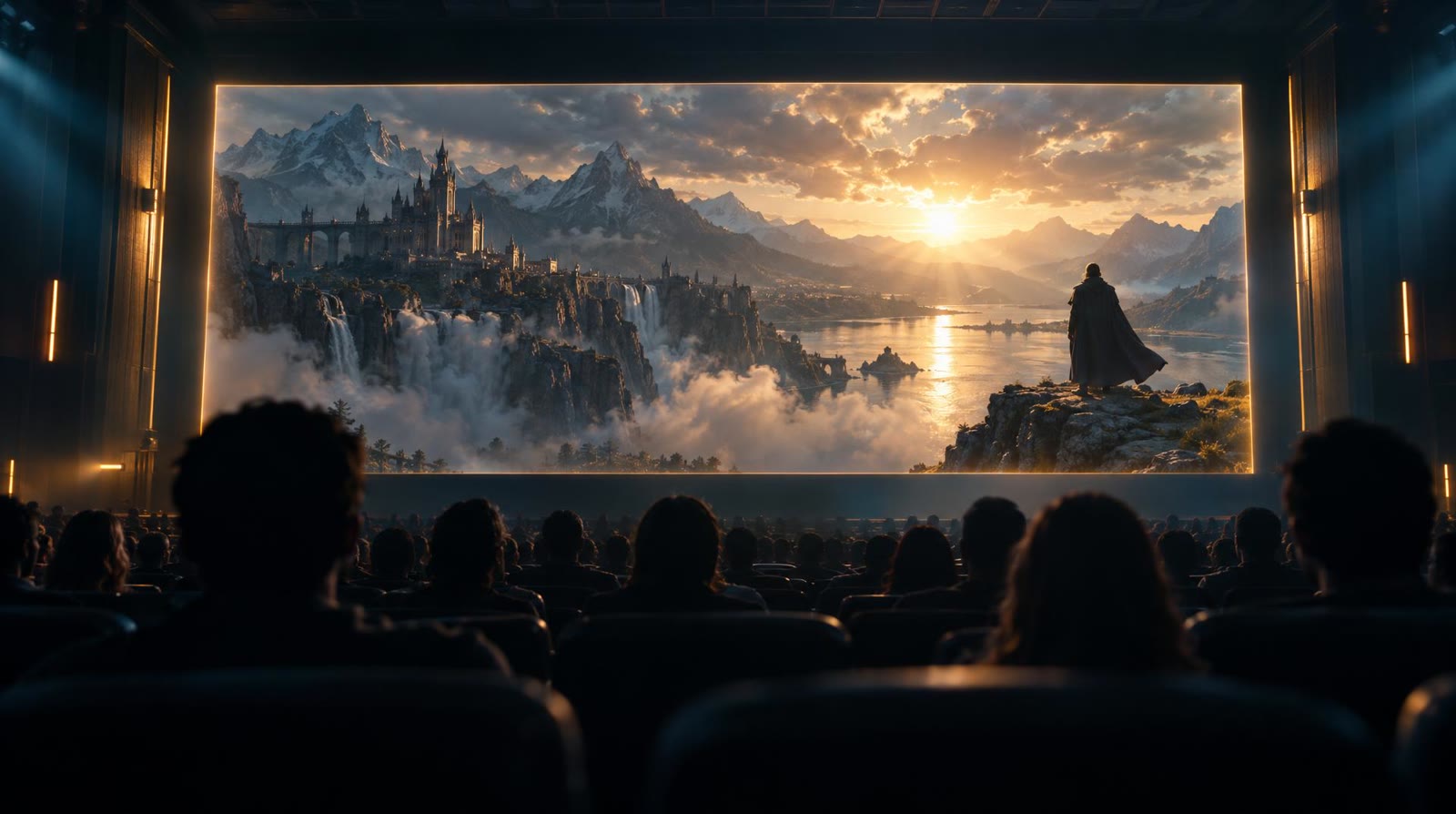
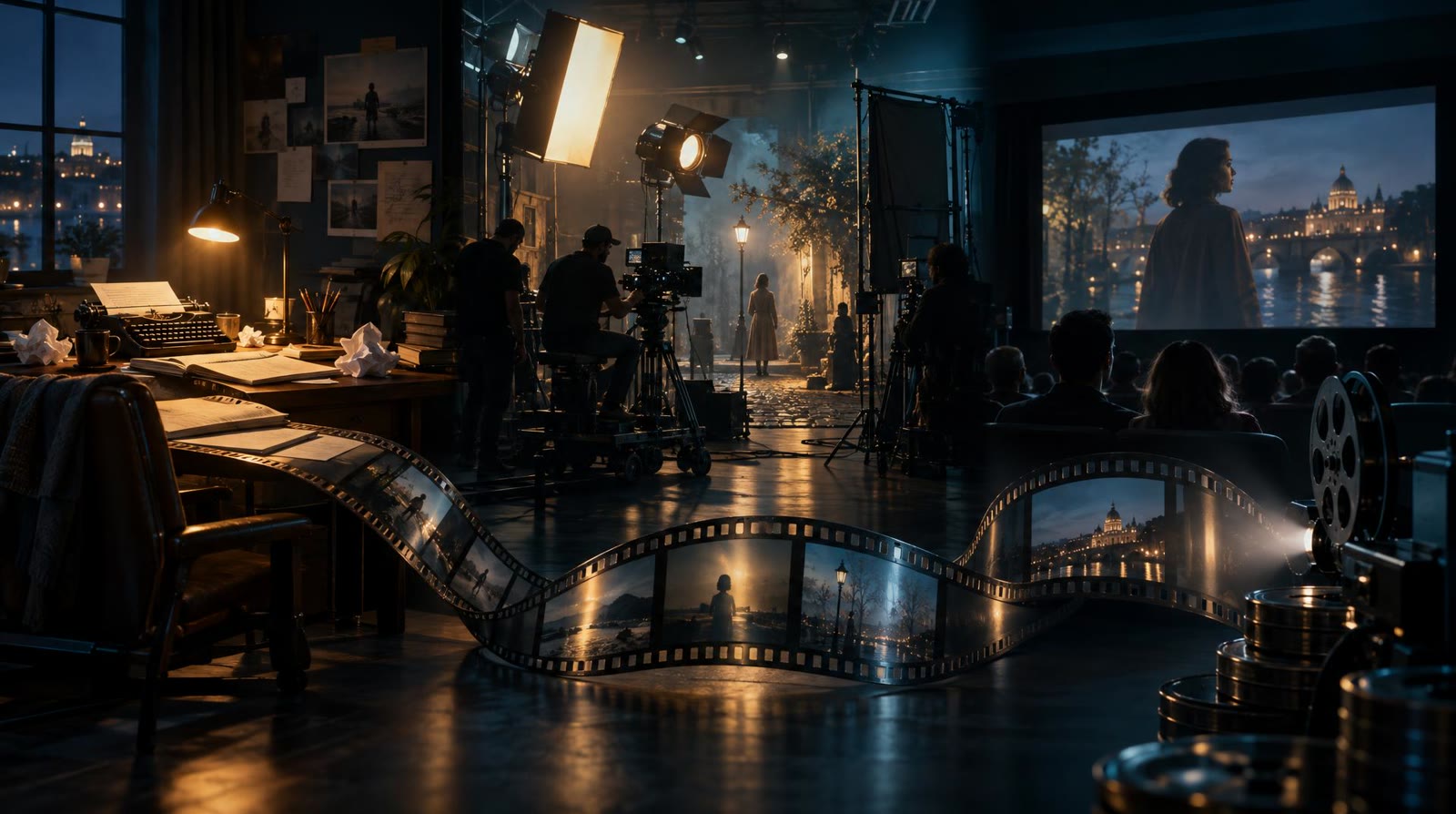
Text to movie AI should cover everything a film crew covers, not only the moment the camera rolls. In filmaris your prompt passes through the writer's room first: it grows into a screenplay divided into acts, with its scenes in a fixed order and lines for every character. Then comes the set, where each shot gets its framing, camera position and blocking. Last is the screening room, where the scenes play back to back as one film. Before you start, you decide how long it should run, anything between a brief teaser and a feature, and filmaris makes films that run 40 minutes or longer.
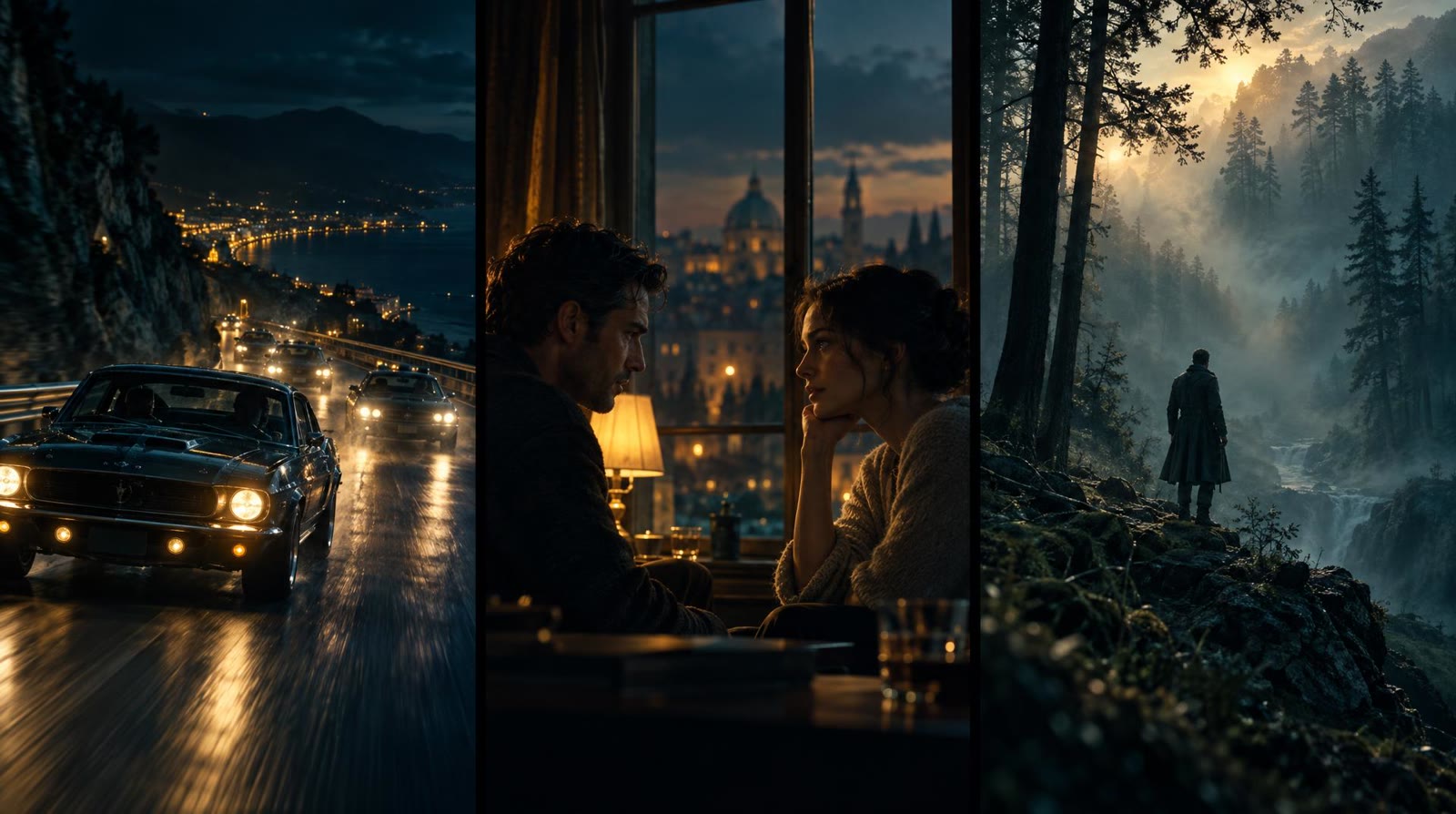
A car chase at night, two people talking by a window and a forest waking up in mist each ask for a different strength from a video model. filmaris sends every shot to whichever model renders that kind of image best, so the chase keeps its speed and the quiet scenes keep their detail. Used on their own, those same models answer each prompt with a shot lasting seconds, and assembling hundreds of such snippets into a plot remains your own job. Here the stitching is part of the run: the shots come back in script order, voiced and scored, already cut together.
Text to film AI works best when you can look before anything is rendered. filmaris draws a storyboard first, a start frame for each shot, so the movie exists on paper before it exists on screen. You can pause at each checkpoint: approve the script, then the cast, then every start frame, and only then let the shots be made. Prefer to see just the result? Leave the checkpoints out and the run goes from your text to the finished film on its own. Either way, the page you typed stays the source, and every frame on the wall traces back to it.
Write one sentence about who wants what and what stands in the way. A book or a finished script works as a starting point too.
Pick the length up front, a quick teaser or a full feature, and decide whether you approve each stage yourself or let the run go through.
The movie arrives in scene order on a multitrack timeline, ready to play from the first shot to the last, adjust where you like and export.
Hear your characters speak their lines and see your scenes follow each other on screen, long before there is any budget or crew.
Find out whether a feature-length story holds together by watching all of it at the running time you planned, instead of judging one scene.
Turn a short story or a history lesson into a movie the class can watch, with every scene told in the order it was written.
Bring a watchable movie to the meeting instead of slides, with its storyboard approved frame by frame before a single shot was rendered.
Write a prompt and get a first one-minute movie without paying: screenplay, casting and storyboard, played as a film with camera motion and voiced lines that you keep on your own machine. One per verified inbox. Moving AI footage in every shot, and longer movies, belong to a paid subscription.
Write your first movie →A movie that opens, builds and resolves, rather than a loose clip. Your prompt becomes a screenplay, the screenplay becomes a storyboard and shots, and the scenes come back in story order with voices and music, ready to watch and edit.
No. Text to video turns a prompt into one short piece of footage. Text to movie keeps going until there is a story: several scenes, recurring characters, dialogue between them and an ending, all cut into one film. filmaris is built for that second job.
As long as you set it. You fix the duration before the run starts, anywhere up to feature length, and filmaris produces movies of over 40 minutes from a single prompt.
Yes. filmaris sketches every shot as a start frame before rendering. You can sign off the screenplay, the casting and each of those frames before anything moves, or skip the checkpoints and let the whole film run automatically.
Yes, once per verified inbox: your first movie comes as a one-minute storyboard film with voices and camera motion that you download and keep. Real AI video, where every shot is rendered as moving footage, needs a paid plan.
Yes. The screenplay fixes the order of the acts and scenes, and the shots are planned and assembled in that order, so the finished movie plays the story the way your text tells it.