Directors in pre-production
Use it as pre production software: try coverage, shot sizes and camera moves for a scene on cards long before a shooting day is booked.
Give filmaris a story or a screenplay, and it breaks the scenes into numbered shots, draws a frame for each and keeps your characters' faces from card to card.
Board one minute for free per confirmed e-mail: frames that move and speak, not generated video.
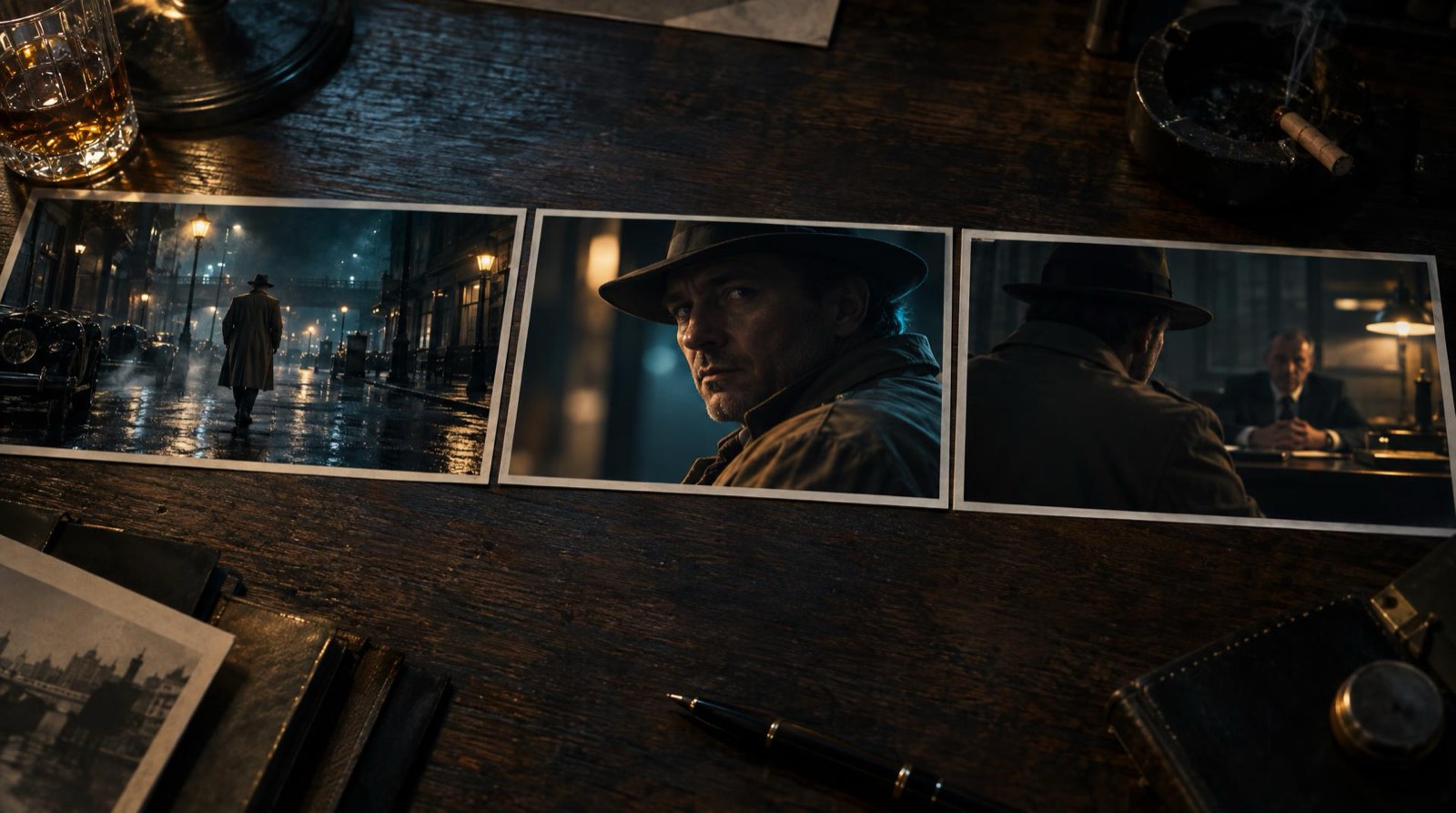
Most storyboard tools make you describe every panel yourself. filmaris begins with the writing instead. Bring a finished screenplay, or have the Script Writer turn a premise into pages first; then the AI storyboard generator goes through those pages one scene at a time and cuts each scene into numbered shots. Every shot gets its framing, from establishing and wide shots through medium and over-the-shoulder to close-ups and extreme close-ups, plus a camera angle and a camera move. The plan doubles as a shot list, so this AI shot list generator and the storyboard are the same set of cards, and everyone works from one numbering.
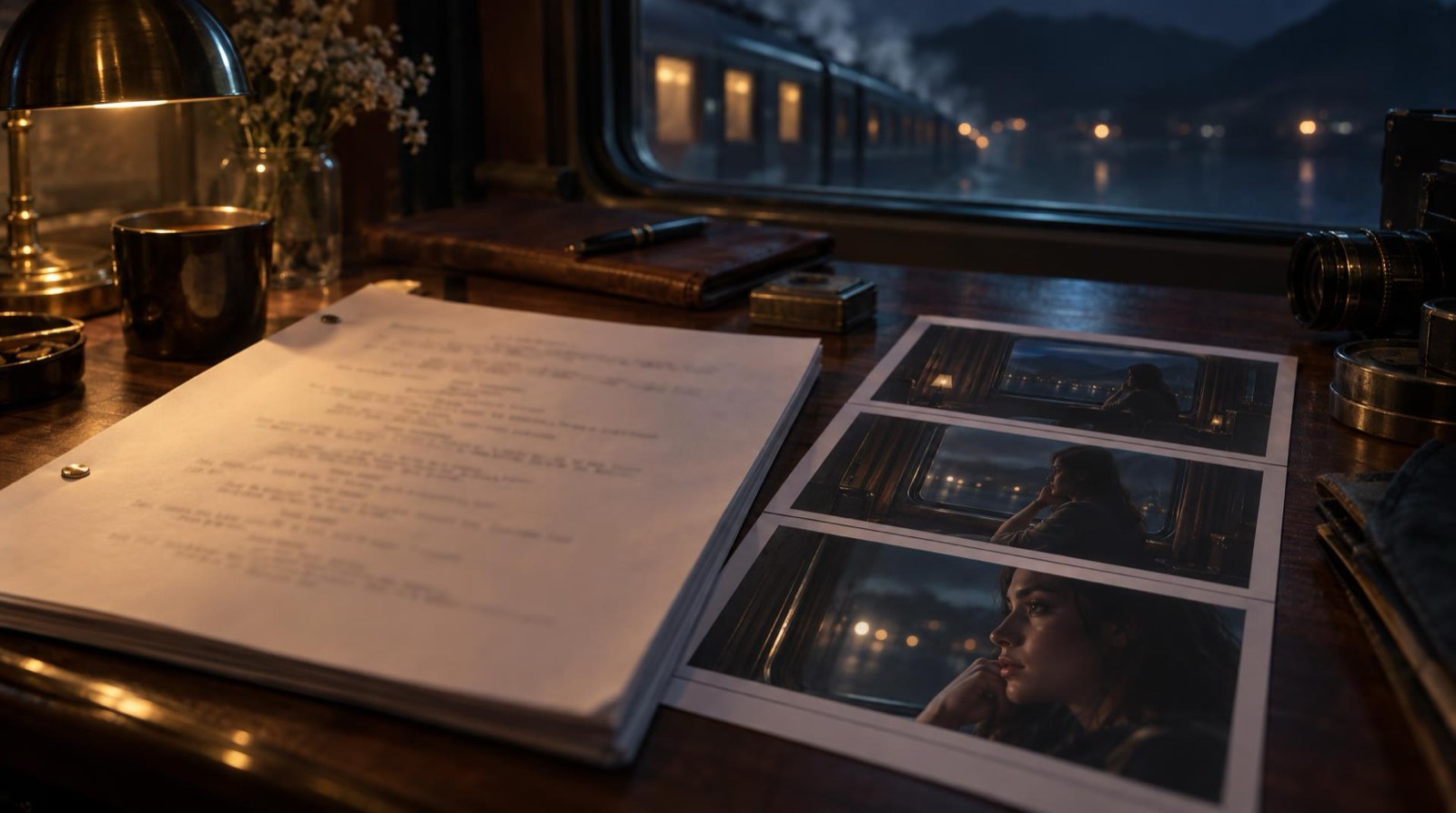
An AI storyboard falls apart when the lead looks different in every panel. Before any frame is drawn, filmaris makes four reference views of each character (close-up, front, three-quarter, back) and reference images for every location and prop. Each frame is generated from those references, so the woman at the window in shot 4 is the same woman on the platform in shot 19. Not happy with a reference? Regenerate it on its card before the shot frames are made.
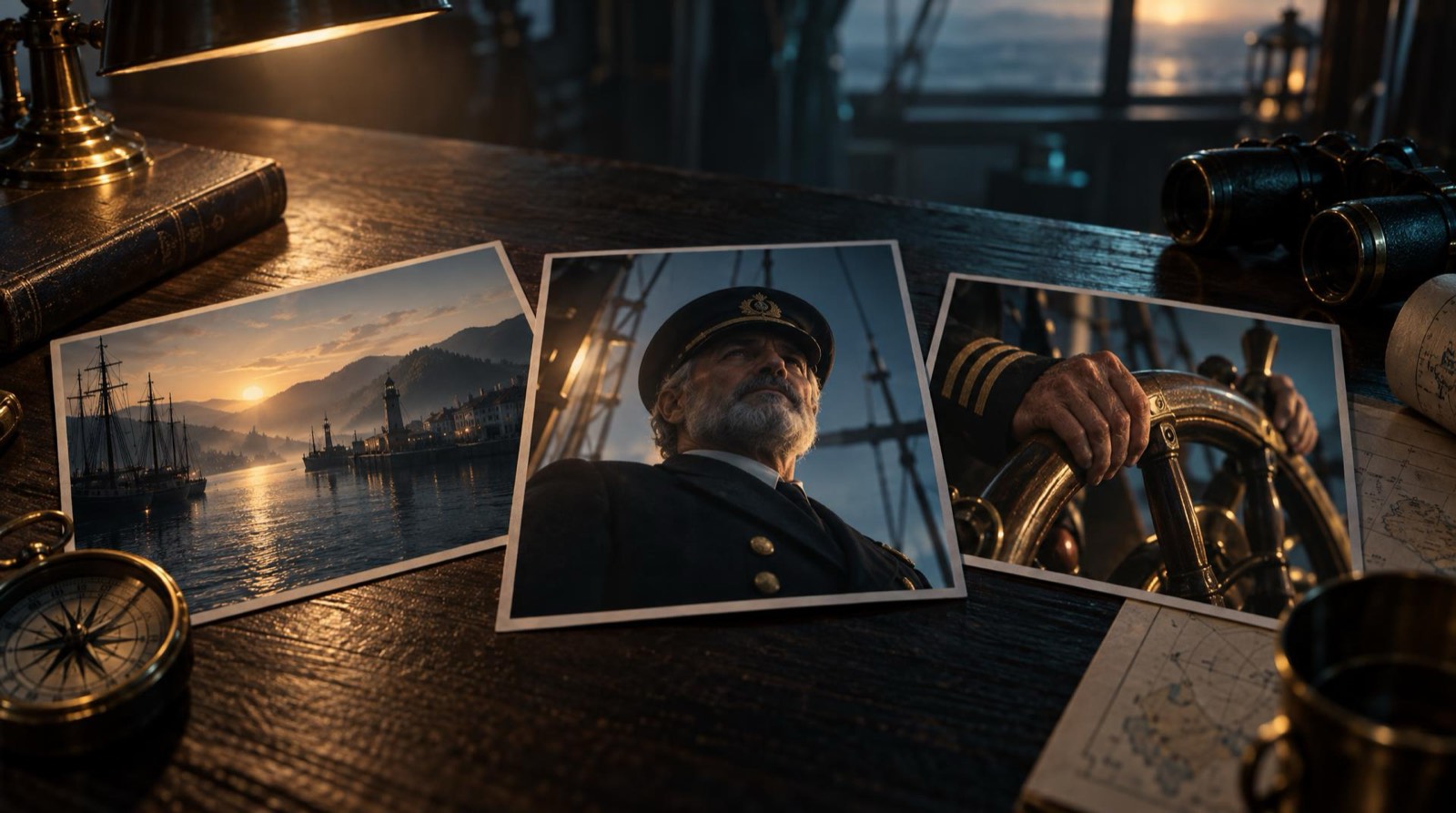
A storyboard is a draft, and drafts change. Open any shot card and regenerate just that frame; earlier versions stay beside it, so switching back to the one you liked takes a click. Describe a fix in words, a darker sky or a different coat, and the frame is edited rather than drawn again from nothing. A missing beat gets its own card: insert a shot before or after any other and it takes a letter, like 12a, so the rest keep their numbers. When you sign off the board, each frame becomes the first frame of its video shot, rendered with Kling 4.0, the storyboard's standard video model, with voices and sound laid underneath.
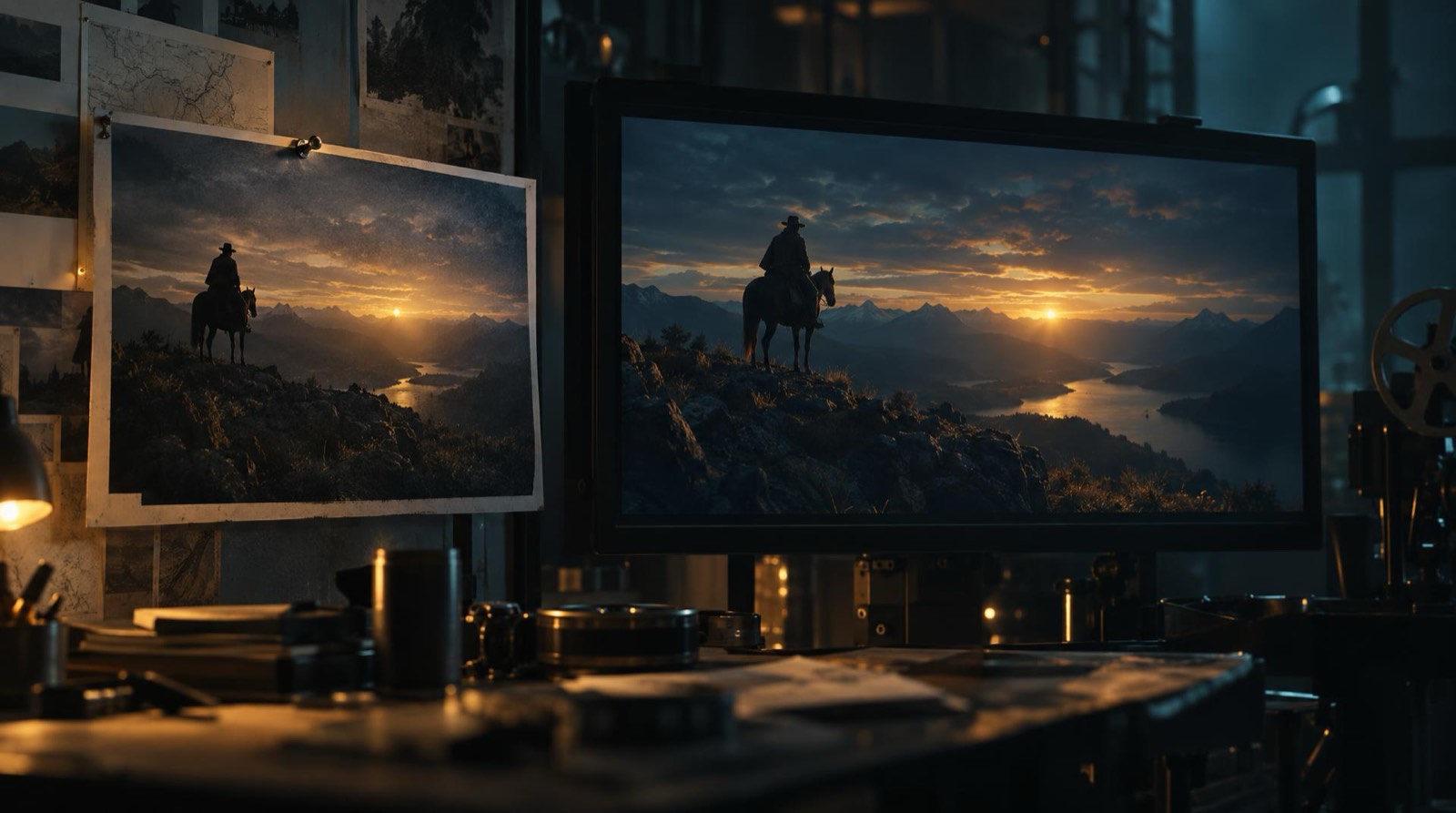
Type a premise, import a screenplay or upload a book. The Script Writer shapes it into scenes and dialogue, and you check the pages before moving on.
Every scene is split into numbered shots with size, angle and camera move. Reference pictures of cast, places and props come first, then one frame per shot.
Regenerate or edit single frames, add the shots that are missing, and approve the board. The approved frames then turn into video shots with voices, music and sound.
Use it as pre production software: try coverage, shot sizes and camera moves for a scene on cards long before a shooting day is booked.
Show a producer how your scenes cut together frame by frame, with the characters drawn the way you described them.
Board a commercial or brand film for client sign-off, then turn those very frames into the finished spot instead of starting over.
Learn coverage by doing it: see one scene as a wide, a two-shot and a close-up, and redraw a frame to compare the choices.
A confirmed e-mail unlocks one free film of one minute: filmaris writes the script, draws the cast, boards each shot and plays the frames back with camera motion and the characters speaking, as a file you download. These are still storyboard frames in motion, not generated video. Your screenplay and a first set of pictures of cast, sets and props cost nothing too. Turning the frames into real AI video, and boarding a longer film, takes a paid plan.
Board my first minute free →Yes, for your first one-minute film. filmaris reads or writes the script, gives every shot its own frame and replays the board with camera motion and the dialogue spoken aloud. One per confirmed e-mail; animating frames into real video and boarding longer films take a paid plan.
Yes. Import your screenplay and filmaris keeps its scenes, characters and dialogue, then splits every scene into shot cards. No script yet? The Script Writer drafts one from a premise, and you approve it before a single frame is drawn.
Each shot card carries its number, shot size, camera angle and camera move, along with the lines spoken in it. Read in order, the cards are your shot list; looked at as pictures, they are the storyboard.
Every character is drawn first as a reference set: close-up, front, three-quarter and back. Locations and props get references as well. Each frame is generated from these, and a reference that misses can be regenerated before the frames are made.
Yes. Regenerate one shot without touching the others and keep the older versions to choose from, switch its shot size, angle or camera move, or type an edit such as "make the coat red". You can also add a new shot between two existing ones.
Each approved frame becomes the start frame of its video shot. filmaris renders the shots, screens every one with AI quality control, adds voices, music and sound, and places the scenes on the editing timeline.